
IncludED
Training Programme
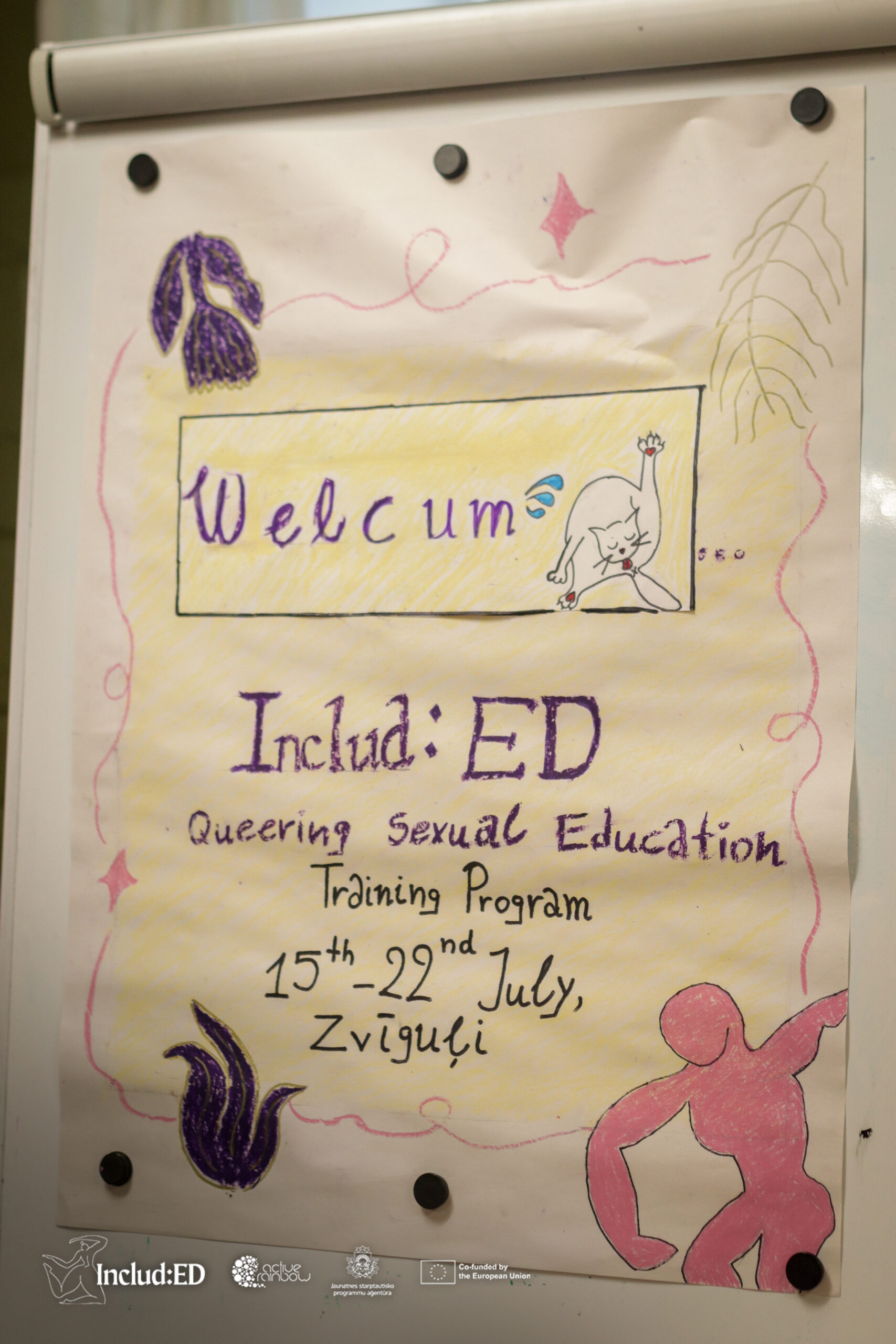
IncludED: Queering Sexual Education
July 2025 • Latvia
Project IncludED consisted of three phases: a Preparation Period, an 8-day Training Course in Latvia, and a Follow-up Period with local actions in each partner country.
IncludED: Queering Sexual Education was created to respond to the ongoing lack of inclusive, intersectional and affirming sexuality education for LGBTQIA+/queer youth. The goal was to equip youth workers and educators with practical and creative tools to build safer, braver learning spaces and elevate the experiences of young people in their learning environments, including Erasmus+ projects, local youth work and beyond.
The inspiration came from our team’s lived experiences of exclusion, homophobia, transphobia, sexism and systemic injustice in educational settings. We recognize that, despite the many benefits of mobility projects, significant challenges can occur, stigma, safety concerns, discrimination, language barriers, cultural differences and lack of accessibility. IncludED centers intersectionality, radical care, pleasure activism and queer joy to meet these challenges with compassion and skill.
RAINBOW STORIES
Interviews with Participants 1
Meet part of our participants who shared with us their reflections and learning outcomes from their participation.
In this first video they respond to the question: What is queering up sex ed for you?
Click below to watch the interview.
Interviews with participants 2
Meet part of our participants who shared with us their reflections and learning outcomes from their participation.
In the second video they respond to the question: Why projects like IncludED are important?
Click below to watch the interview.
Interviews with participants 3
Meet part of our participants who shared with us their reflections and learning outcomes from their participation.
In the third video they respond to the question: What are you taking home with you?
Click below to watch the interview.
Interviews with participants 4
Meet part of our participants who shared with us their reflections and learning outcomes from their participation.
In the second video they respond to the question: A message you want to share with the world.
Click below to watch the interview.
Behind the Creation Interview
Meet Viktorija Tkačenko, the trainer of of programme, as she shares the inspiration behind creating the training, the approach and the diverse and creative methods that were explored, the importance of intersectional and inclusive sex education and more.
Click below to watch the interview.
Associated Card Deck
One of the most exciting outcomes of the project is an Educational Card Deck, co-created by participants during the training.
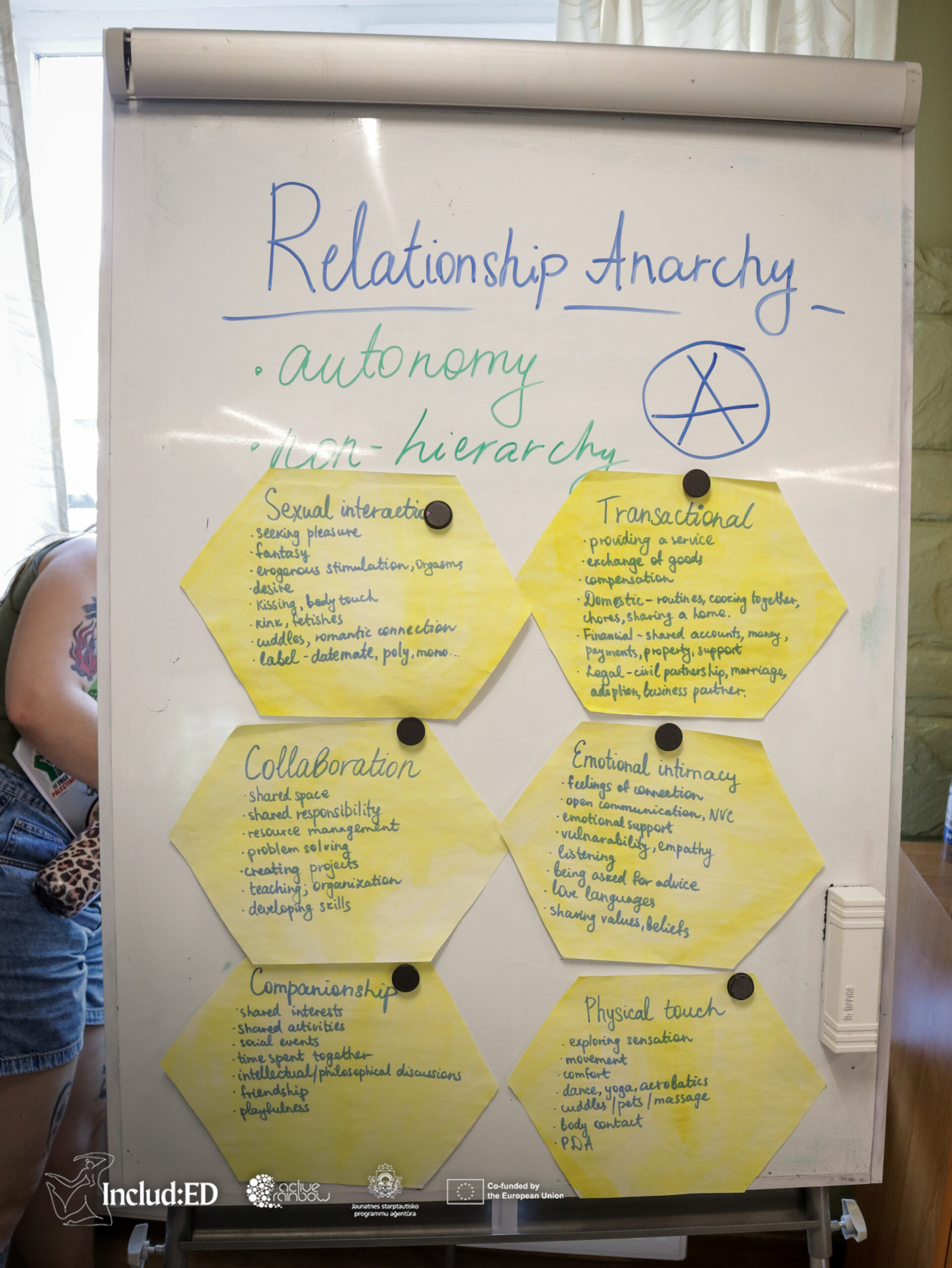
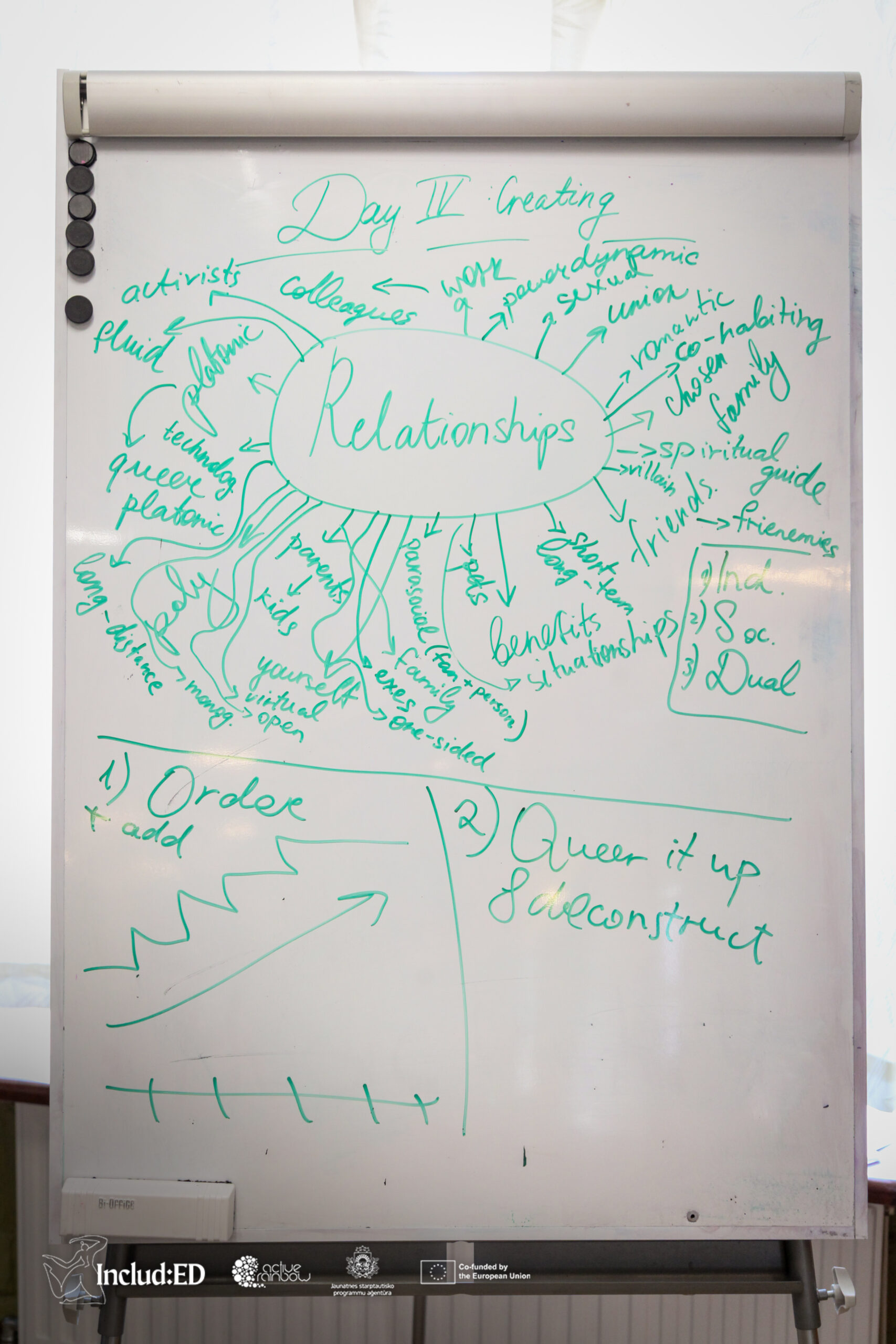
This tool emerged from the sessions on stages of relationships, relationship anarchy, and inclusive approaches to intimacy, consent, and connection.
Follow the link to Publications to find out more.
Testimonials
Articles by participants about their experience during the project.
Follow the link to our blog, scroll, read their testimonials and get inspired.
TRAINING COURSE
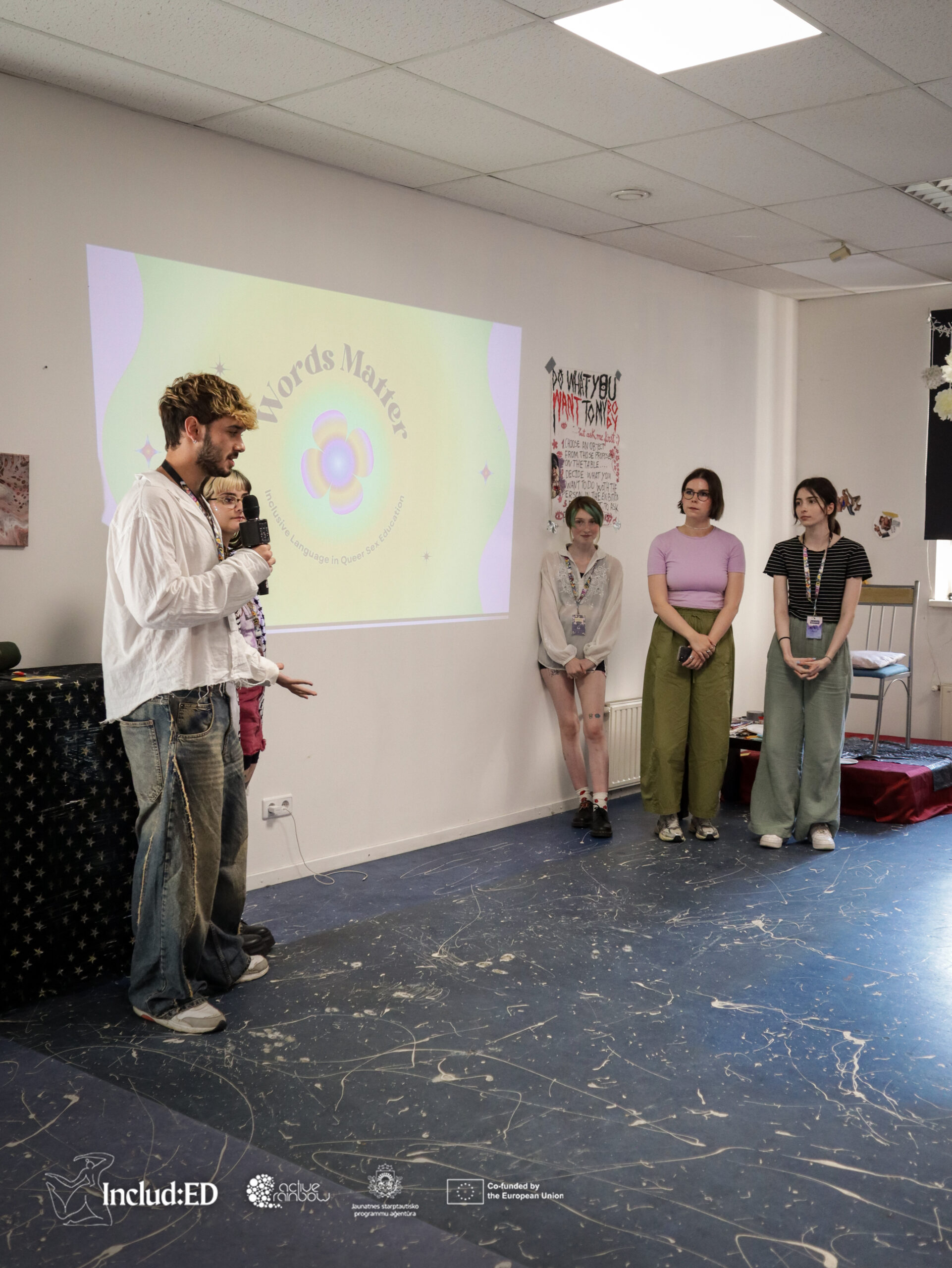
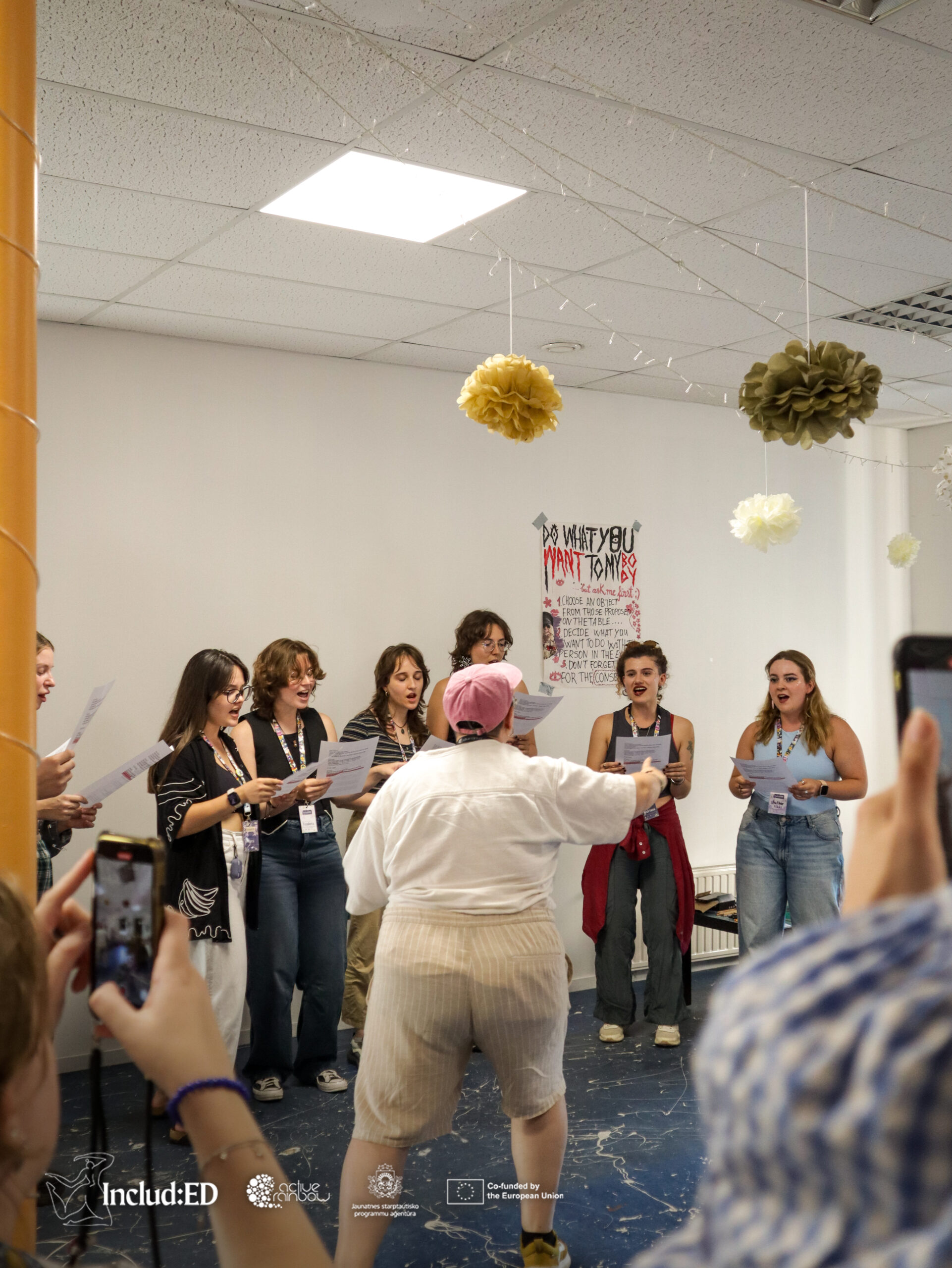
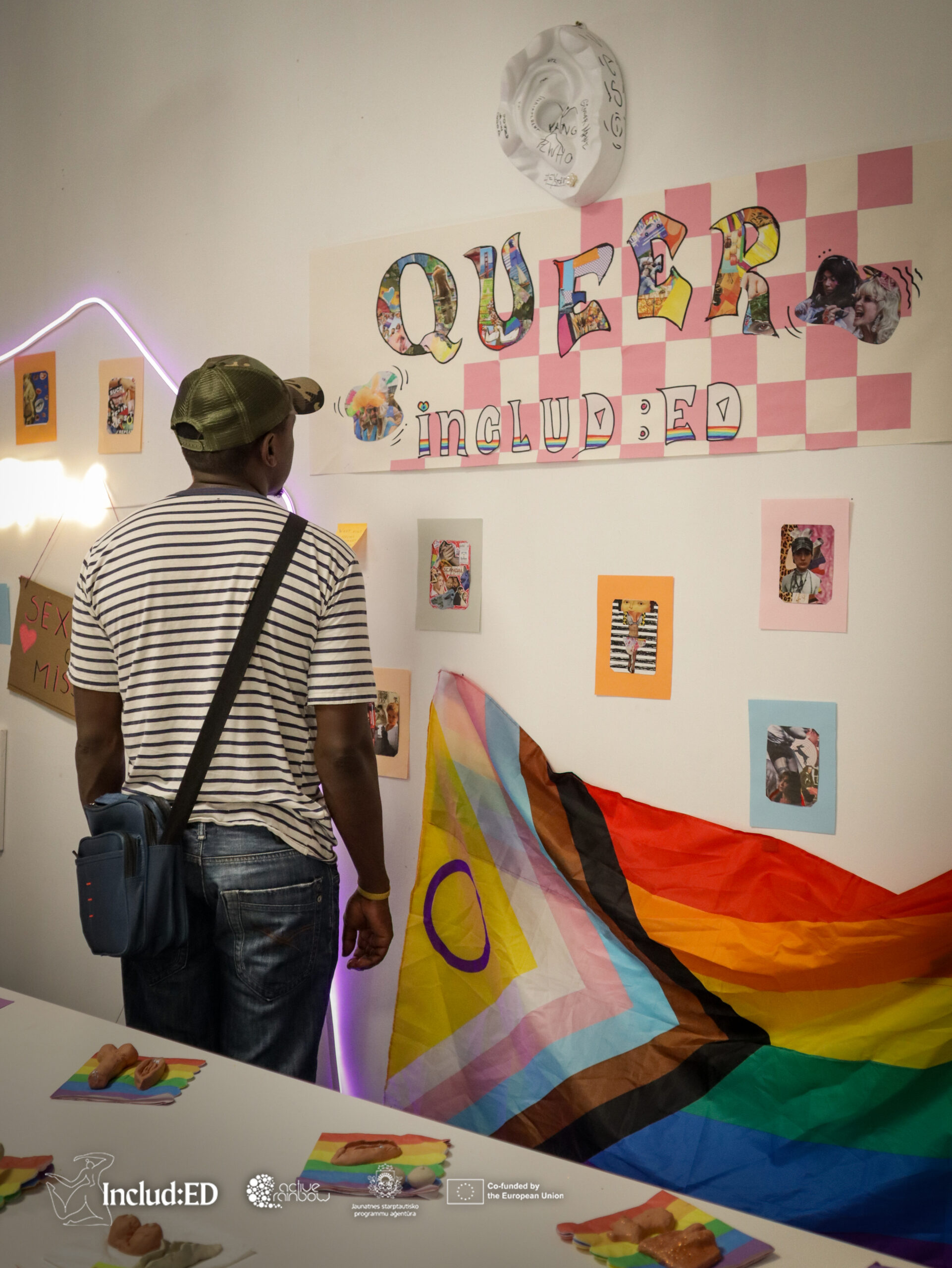
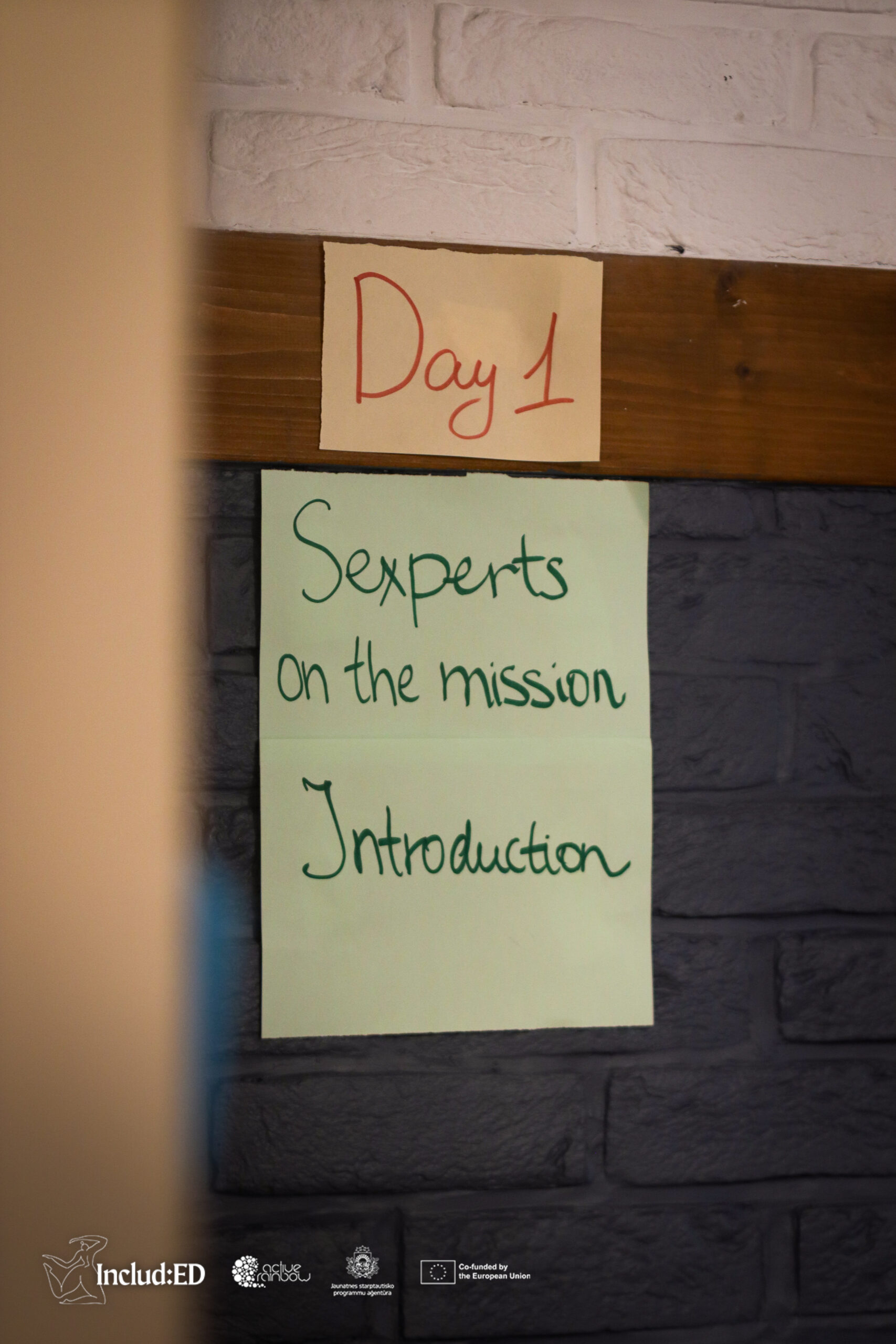
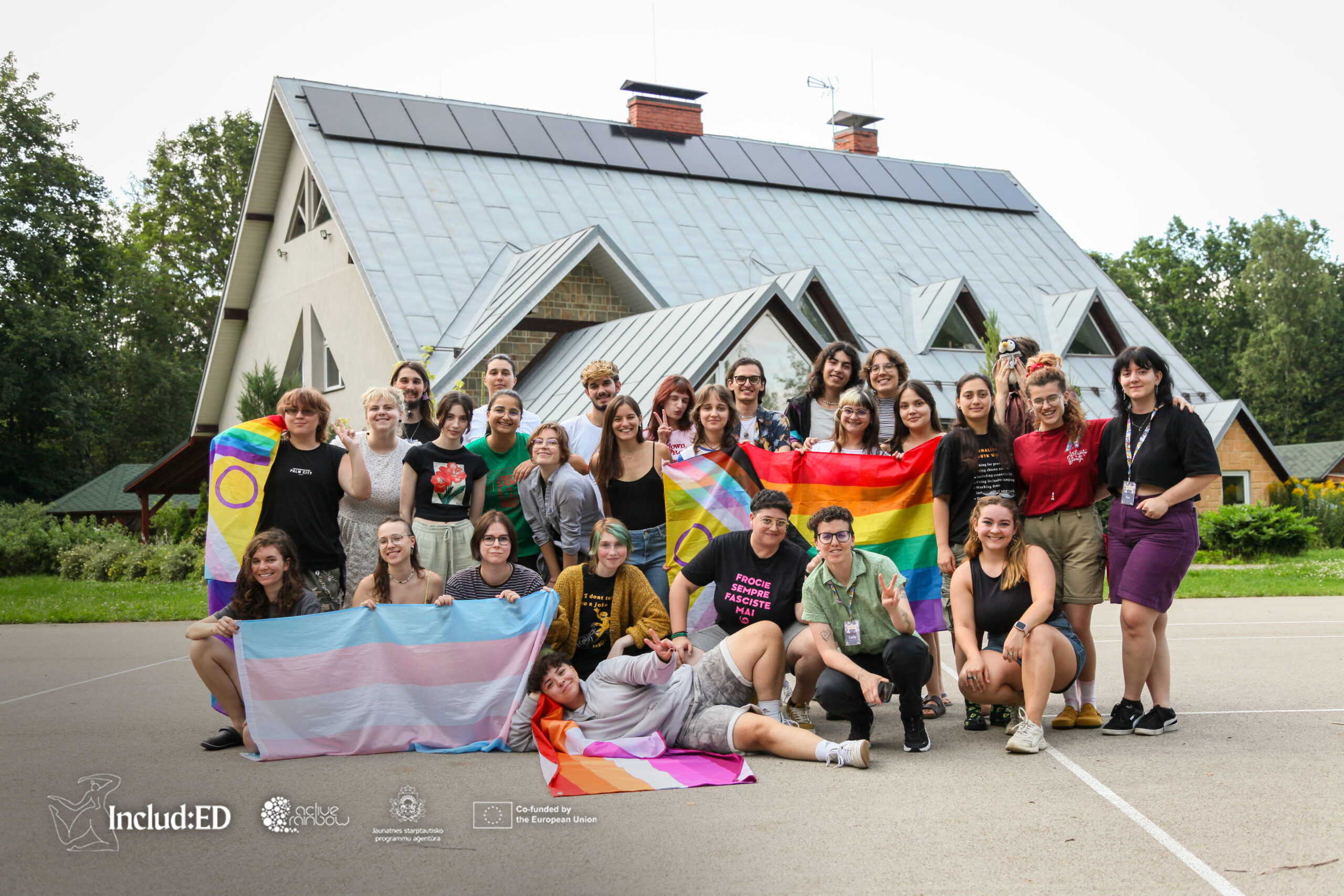
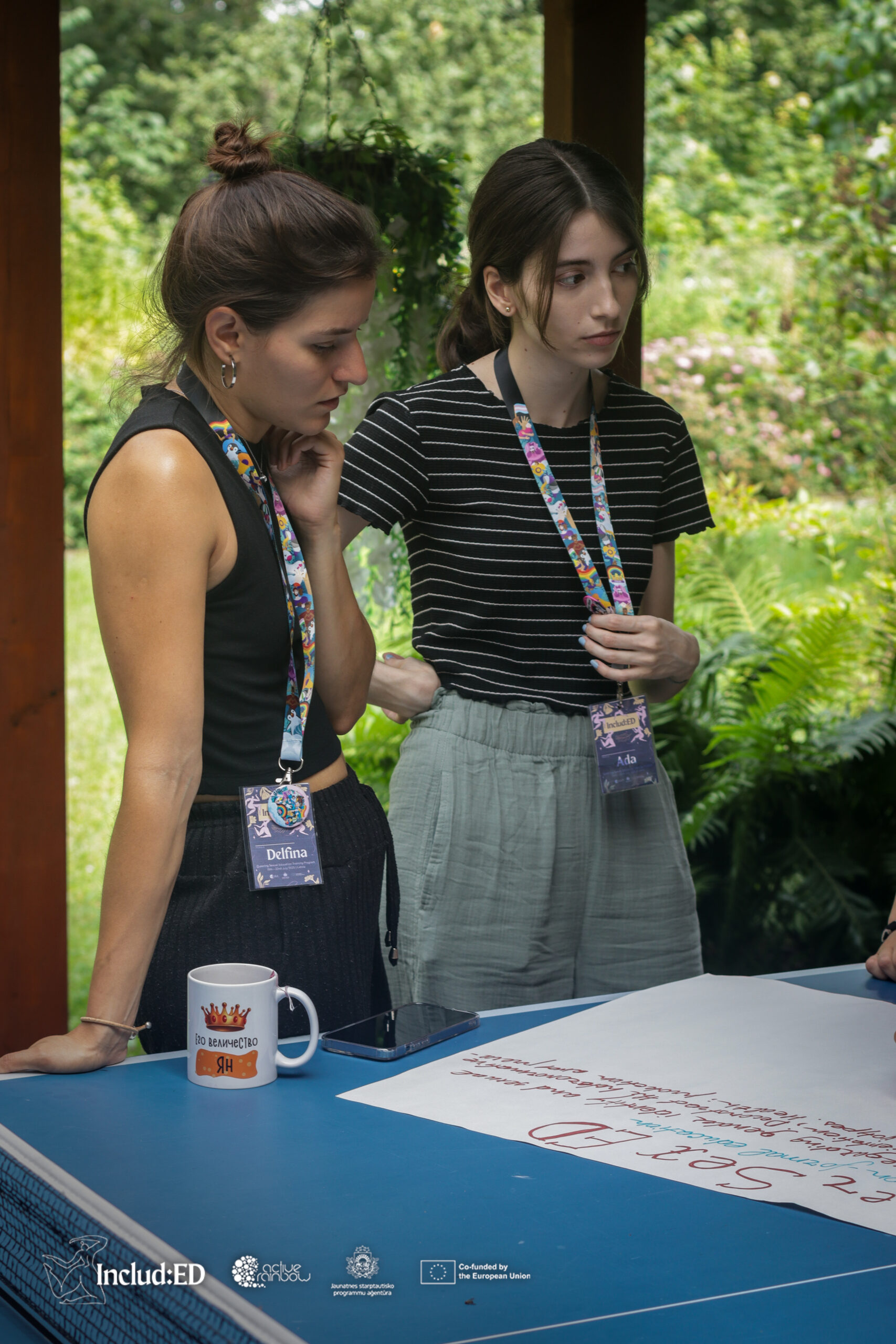
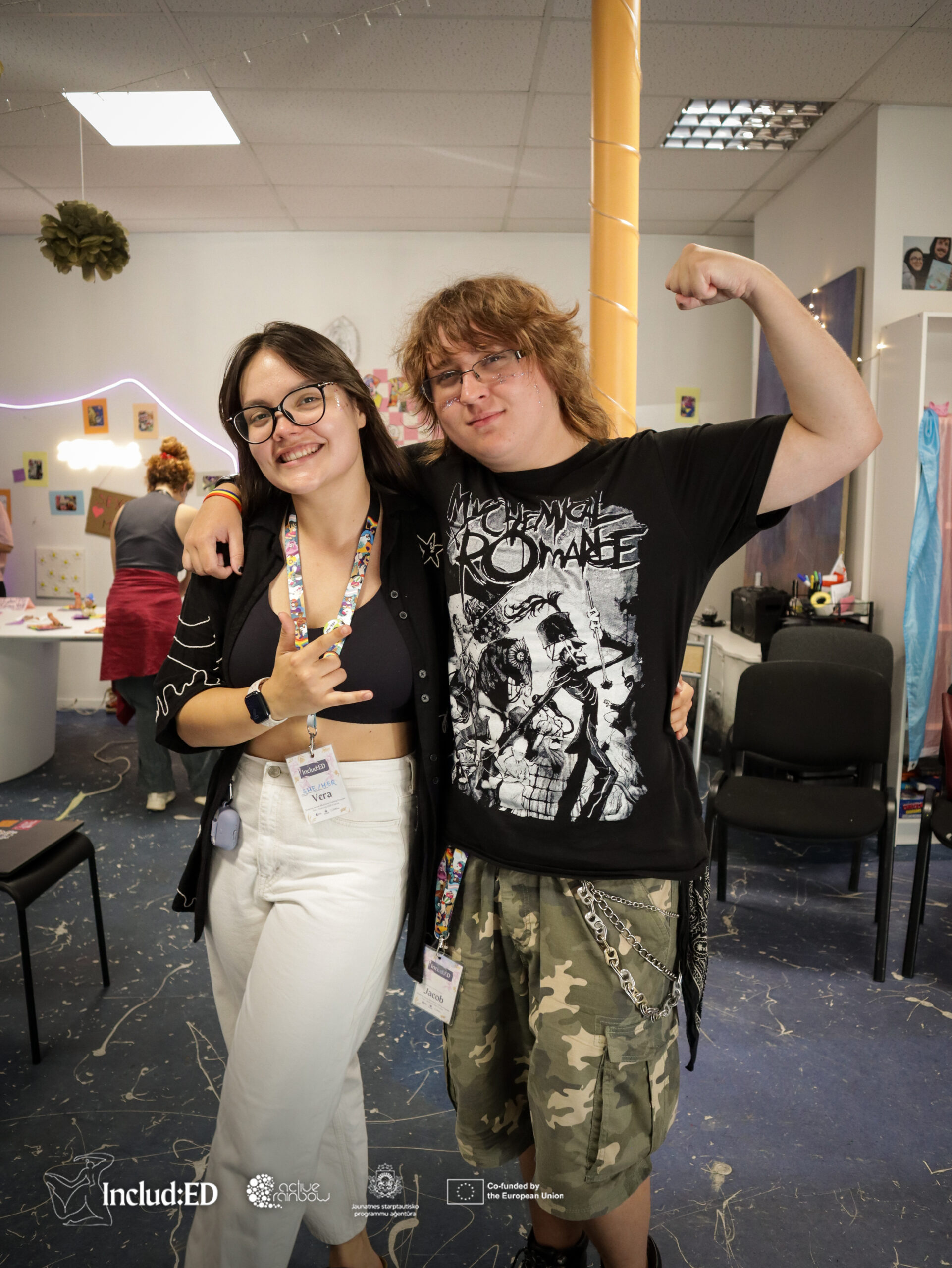
The IncludED training course took place at Zvīguļi (Gauja National Park area, near Sigulda), Latvia, from 15–22 July 2025 (excluding travel days).
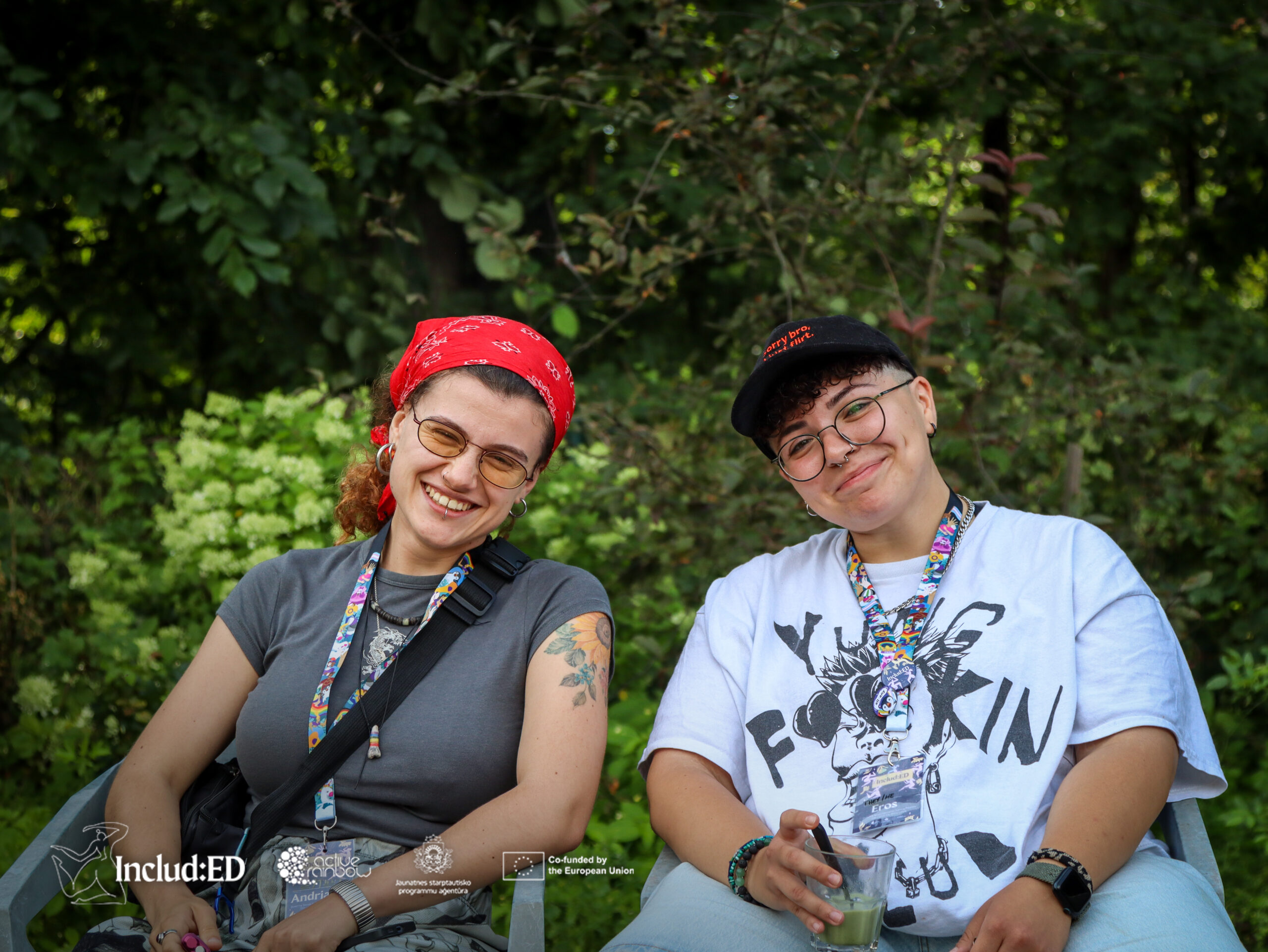
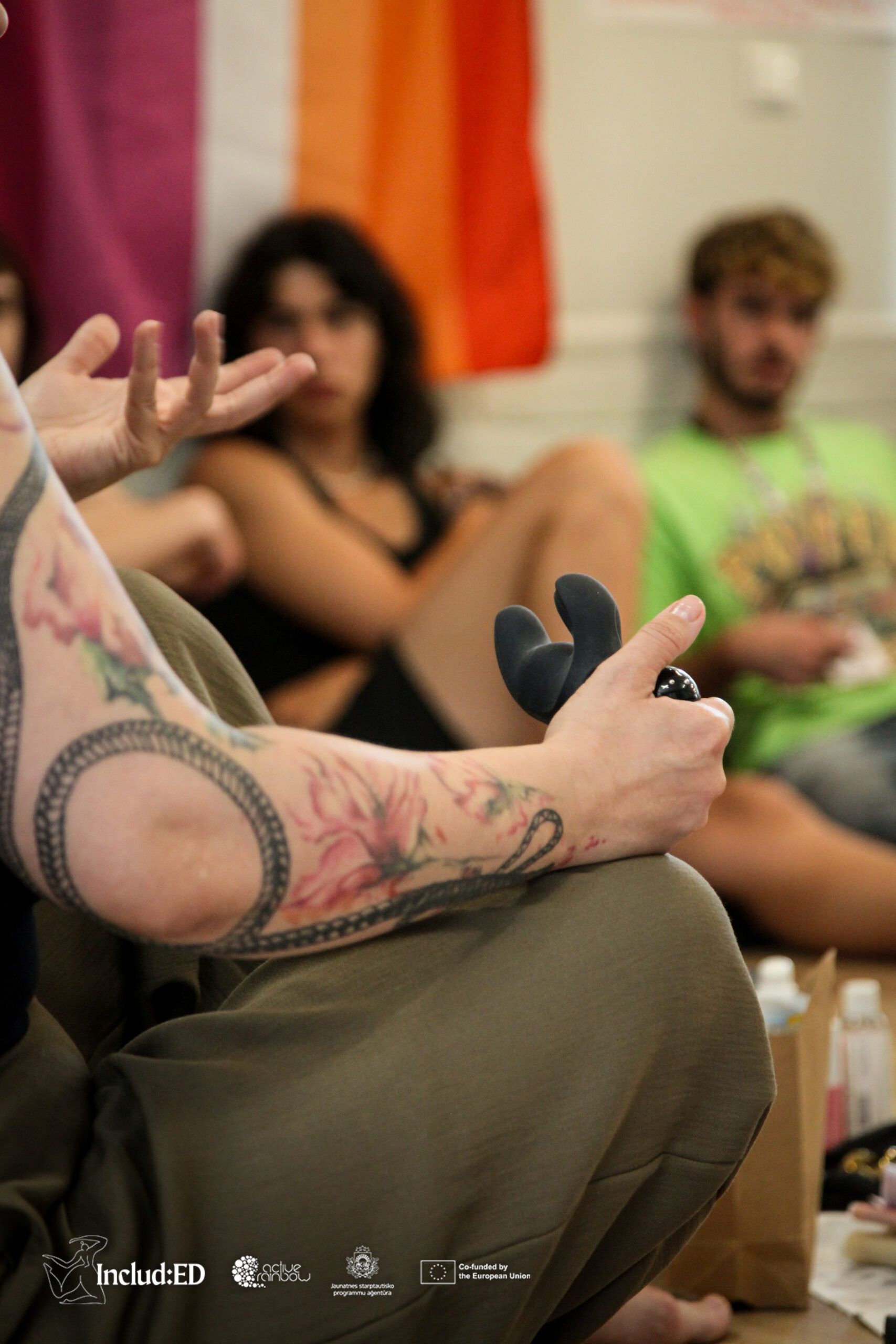
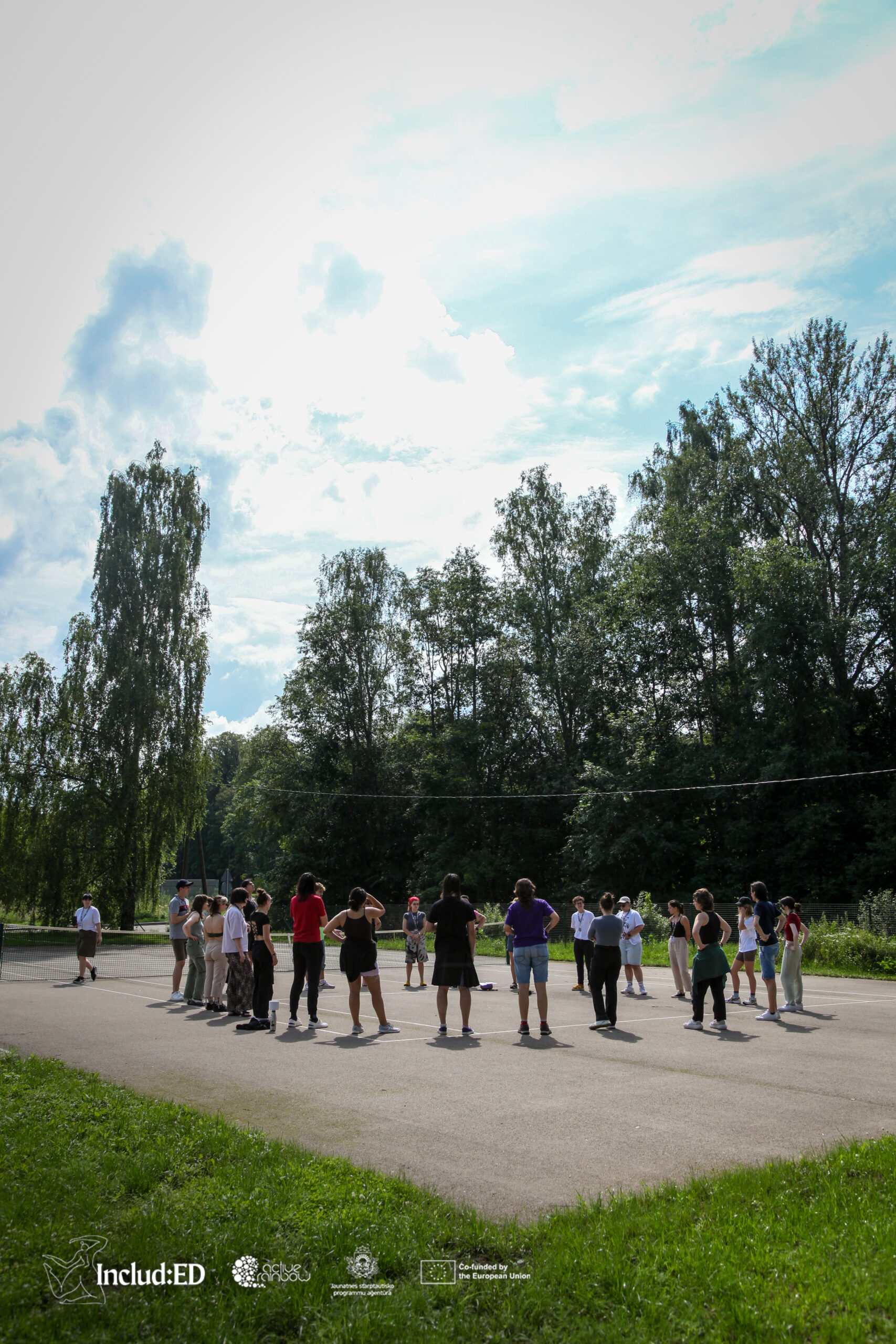
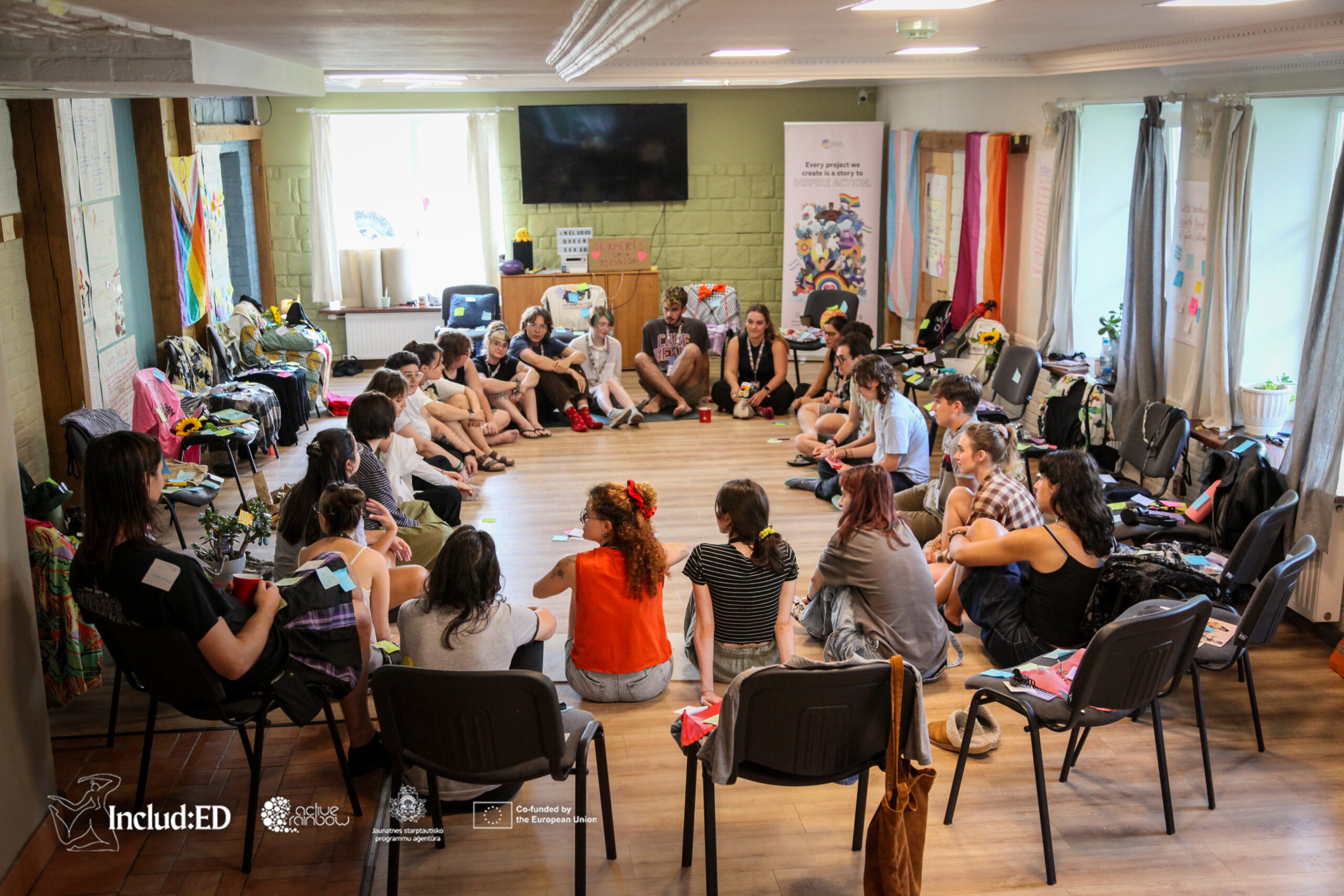
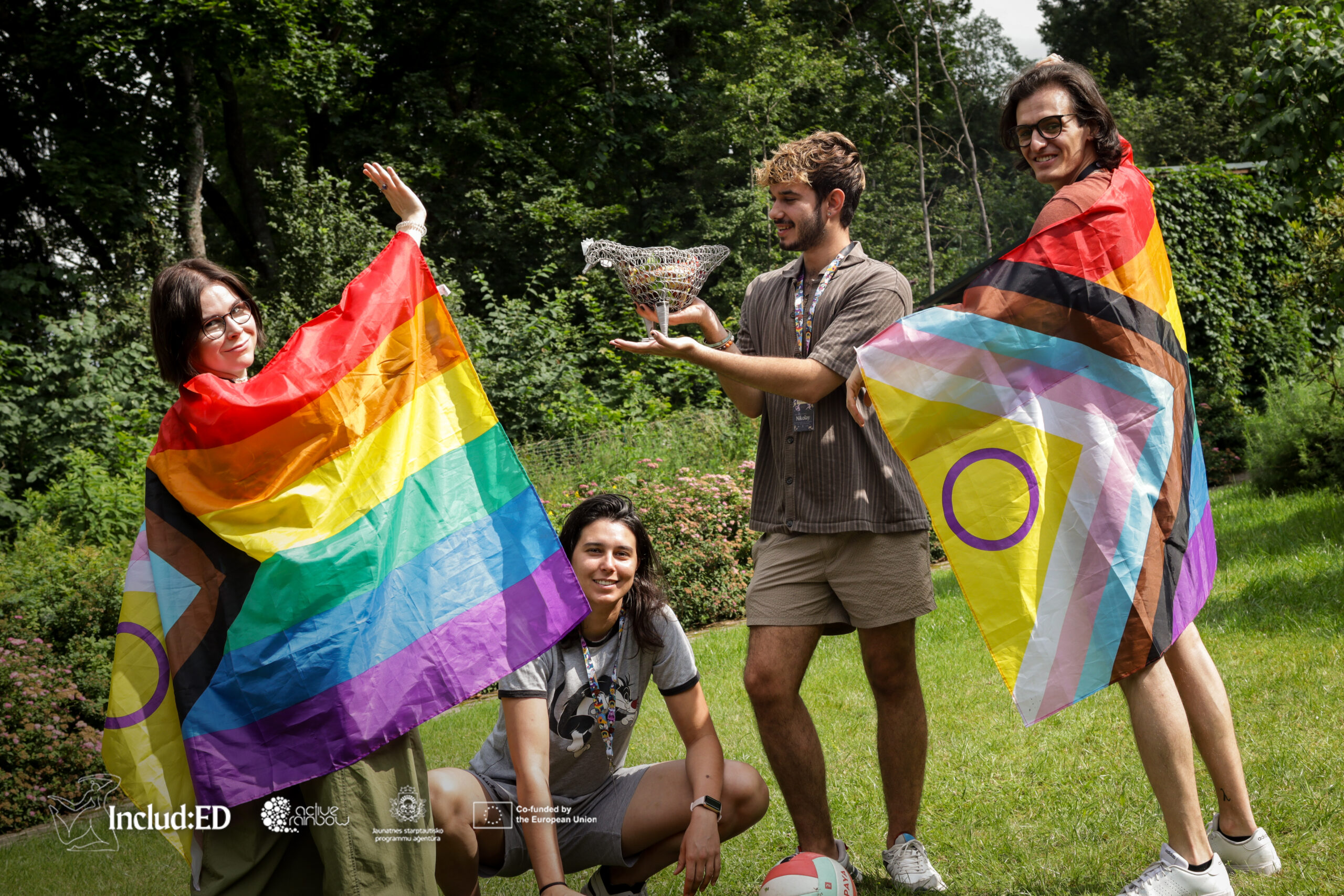
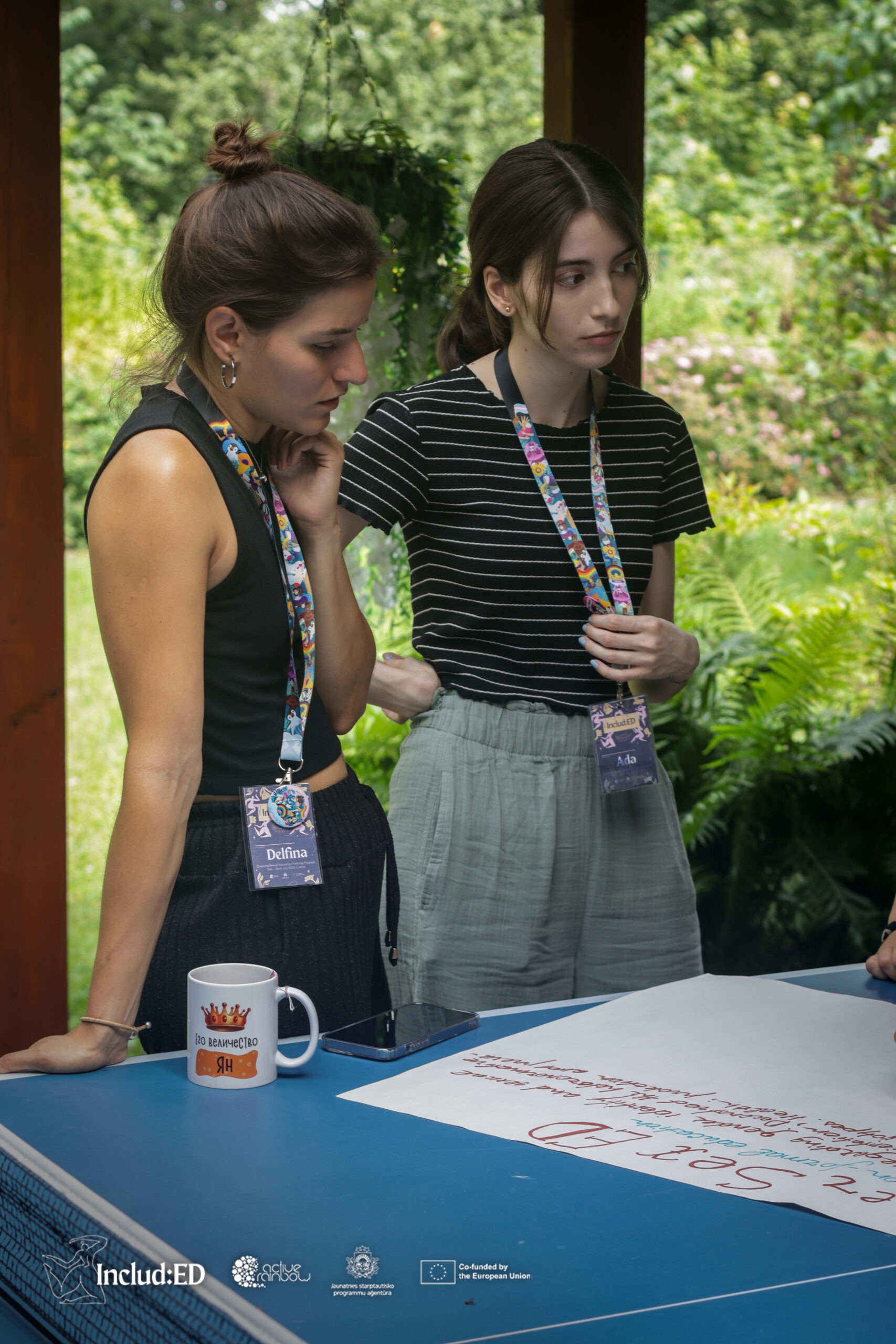
The space was held by a group of 25 participants from Moldova, Greece, Italy, Latvia, Spain, Serbia, Slovenia and Bulgaria, who came together to explore quer inclusive sex education through creative and holistic methods as such as storytelling, embodiment, art, and kinesthetic learning and more.
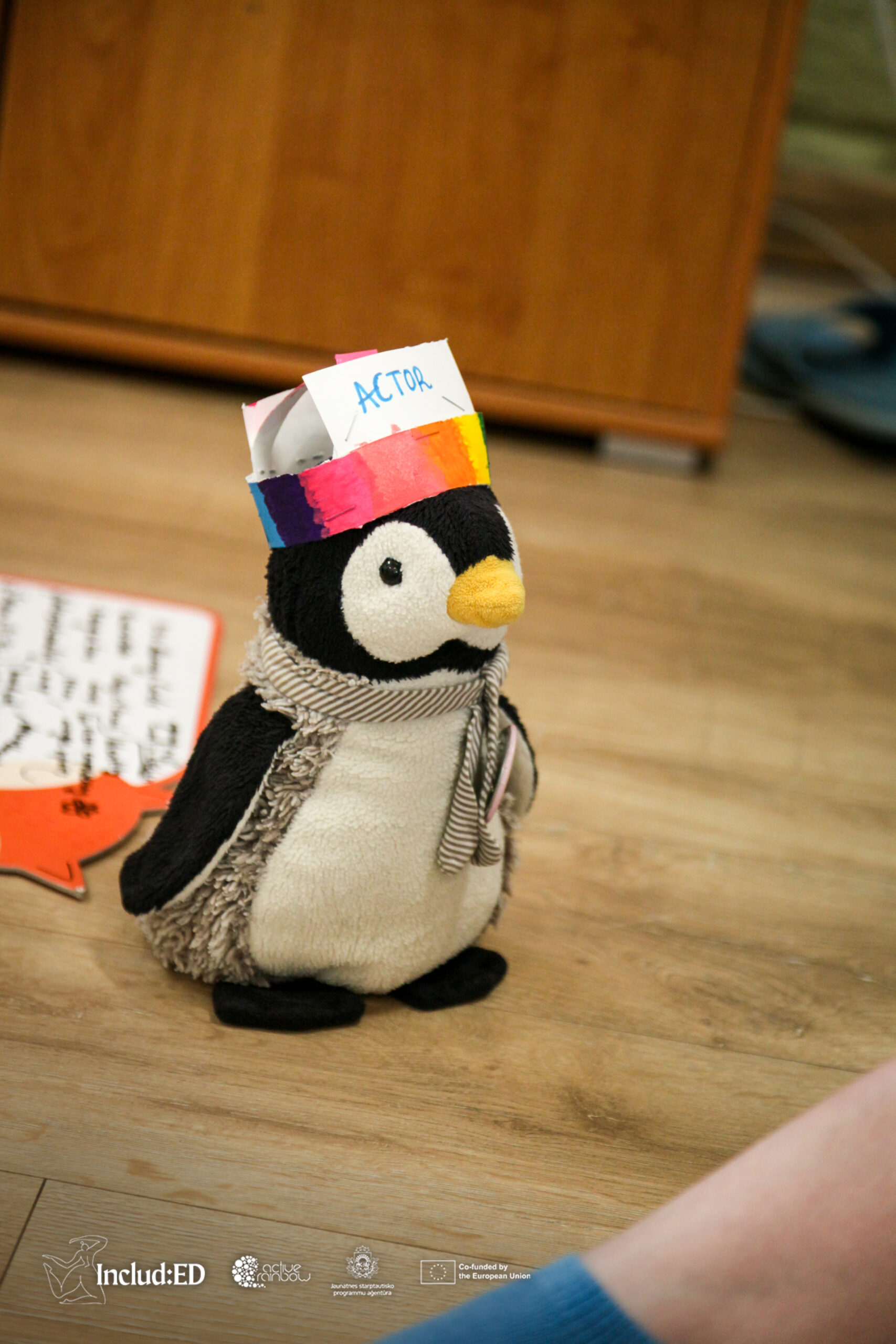
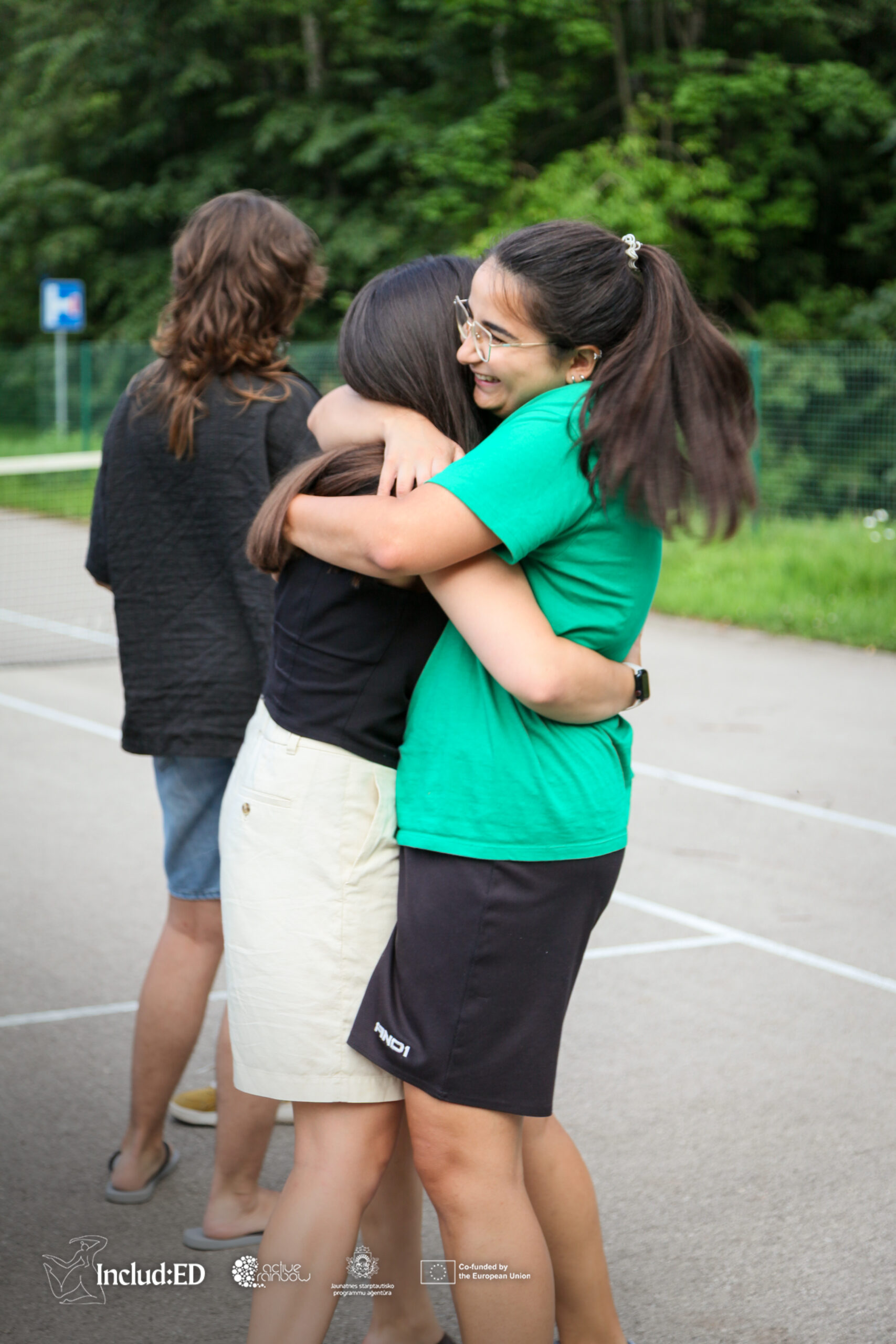
The training followed an interactive and experiential learning approach, involving learning by doing and peer learning. Participants were the creators of their own experience, growing with each other, and learning how to build their intercultural community, co-creating a safer and braver space, while working on their personal and professional development.
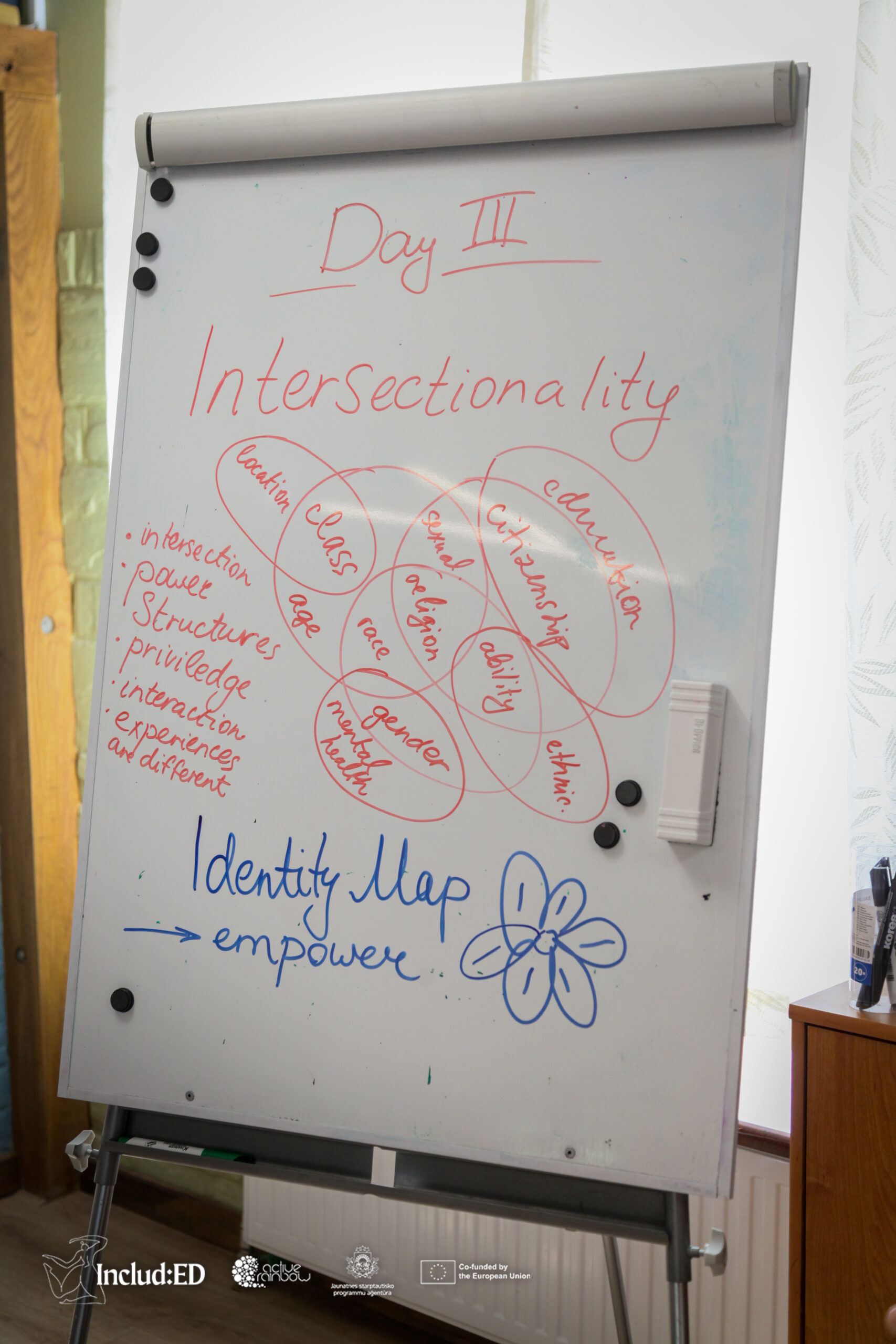
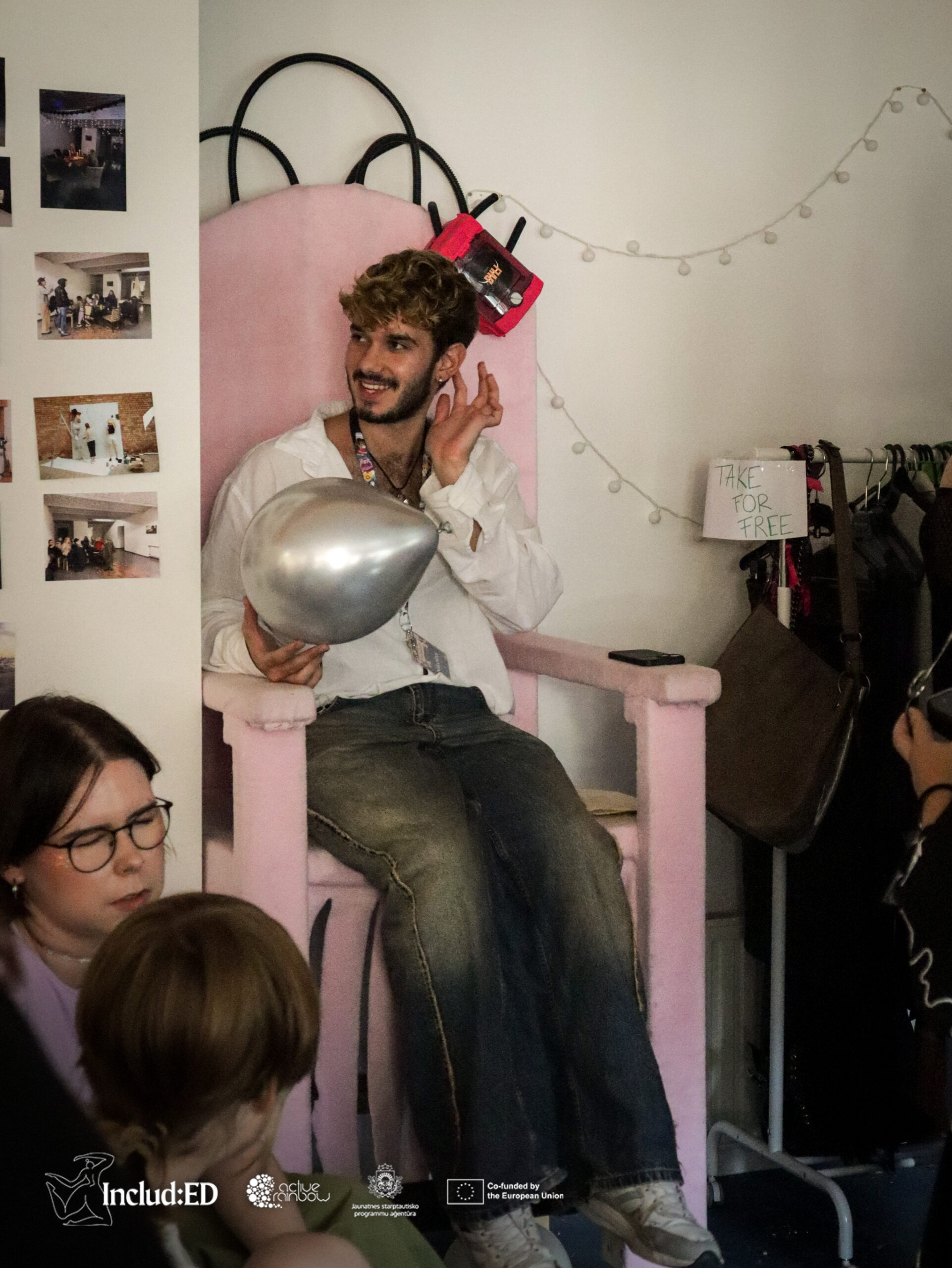
Highlights include: morning community circles; grounding and team building; support care groups (one of the support systems) contributing to community building, and reflection, introduction to inclusive sex education; intersectionality and identity-flower; destigmatizing myths about STIs; Pleasure & Anatomy sessions with guest facilitators from the local field; Embodied Exploration of Relationship Anarchy; building and testing a new card-deck; open space with exchange of tools and methods from the group, outreaching to local community with a public event in Riga, and Local Action Phase planning.
During the program, the youth workers had the opportunity to
- Reflect on and enhance their competencies in inclusive sex education and deepen understanding of intersectionality, cultural sensitivity and LGBTQIA+/Queer realities across the involved countries
- Discover and develop skills to facilitate topics like consent, pleasure, relationships, sexual health using embodied and creative methods that can be used also directly with their young target groups to work with sexual education beyond theory and lectures.
- Practice in action within their intercultural training community radical care, peer support and learning, group reflection, exchange of their knowledge, tools and good practices
- Strengthen intercultural cooperation, awareness and creating a new network of connections and organizations.
- improve essential skills such as communication, teamwork, organization, time management and more.
- Navigate personal and professional challenges beyond their comfort zones, while working on their personal and professional growth, with recognition through Youthpass certificate.
The 3rd phase of the project was the Local Action Phase (July–October 2025) in each participating country.
During this phase, participants put their newly gained competences into action by organizing and implementing activities in their local environments and with their target groups – from workshops and school sessions to community events, online sharing of tools, and more.
TRAINING COURSE GALLERY
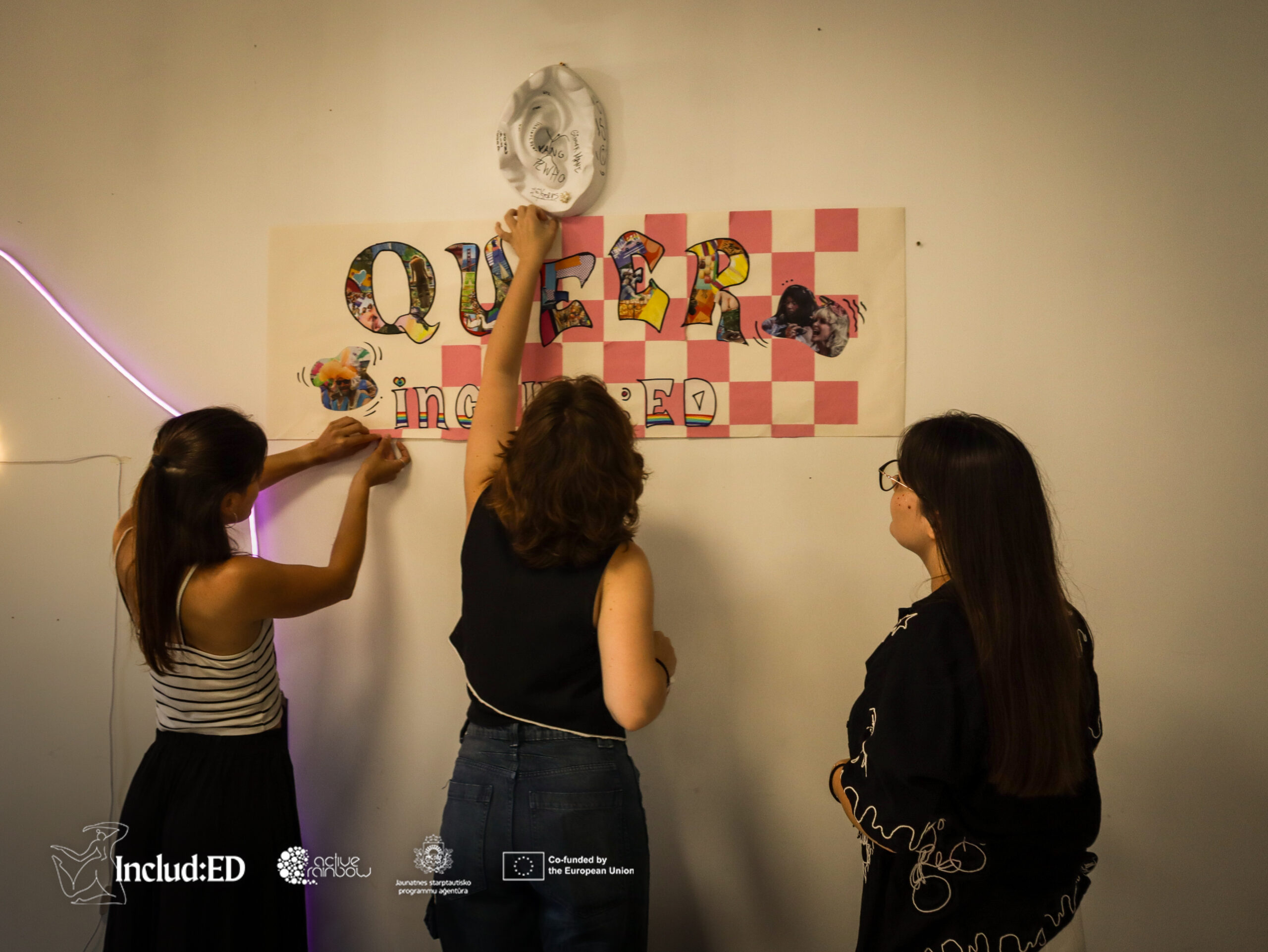
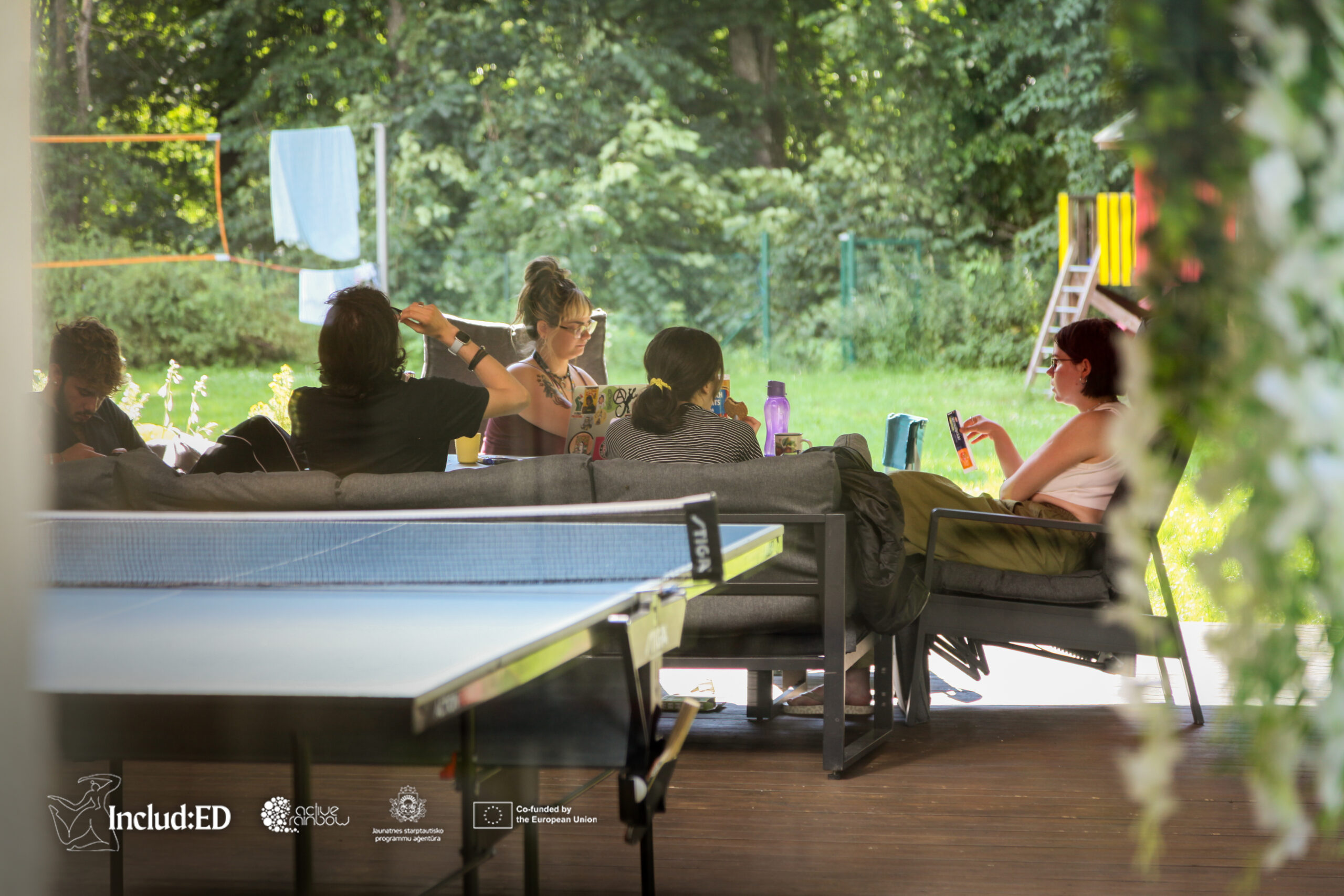
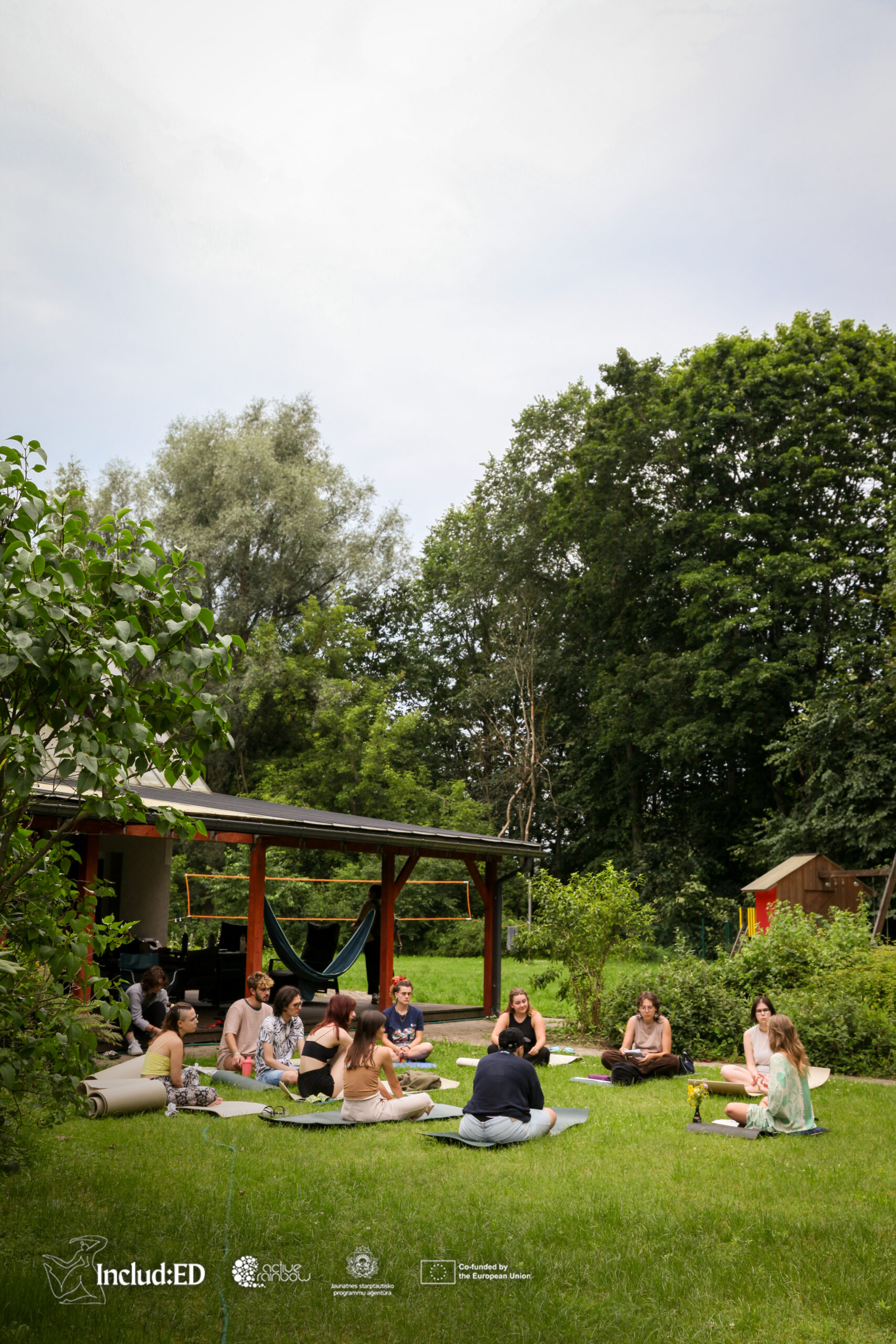
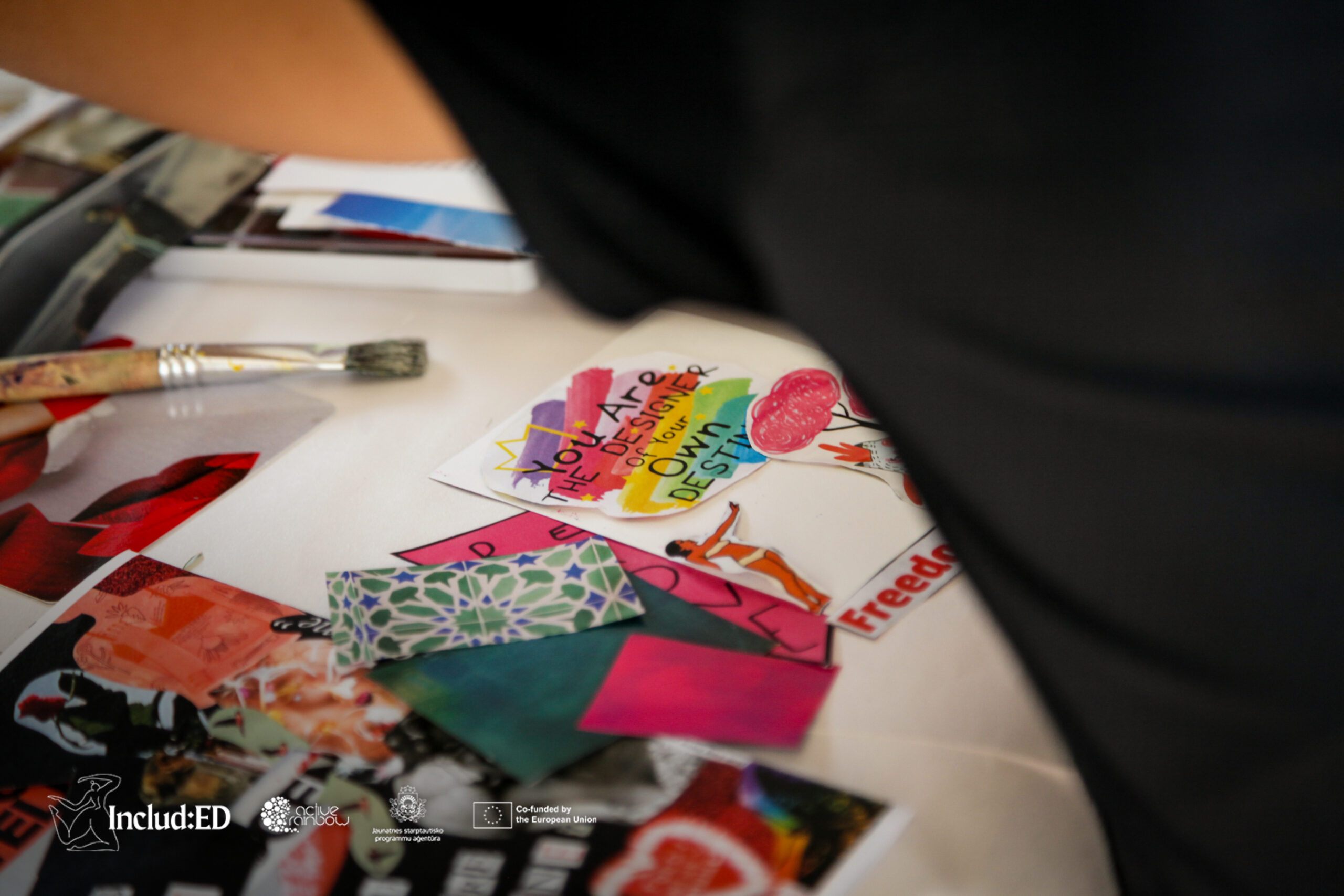
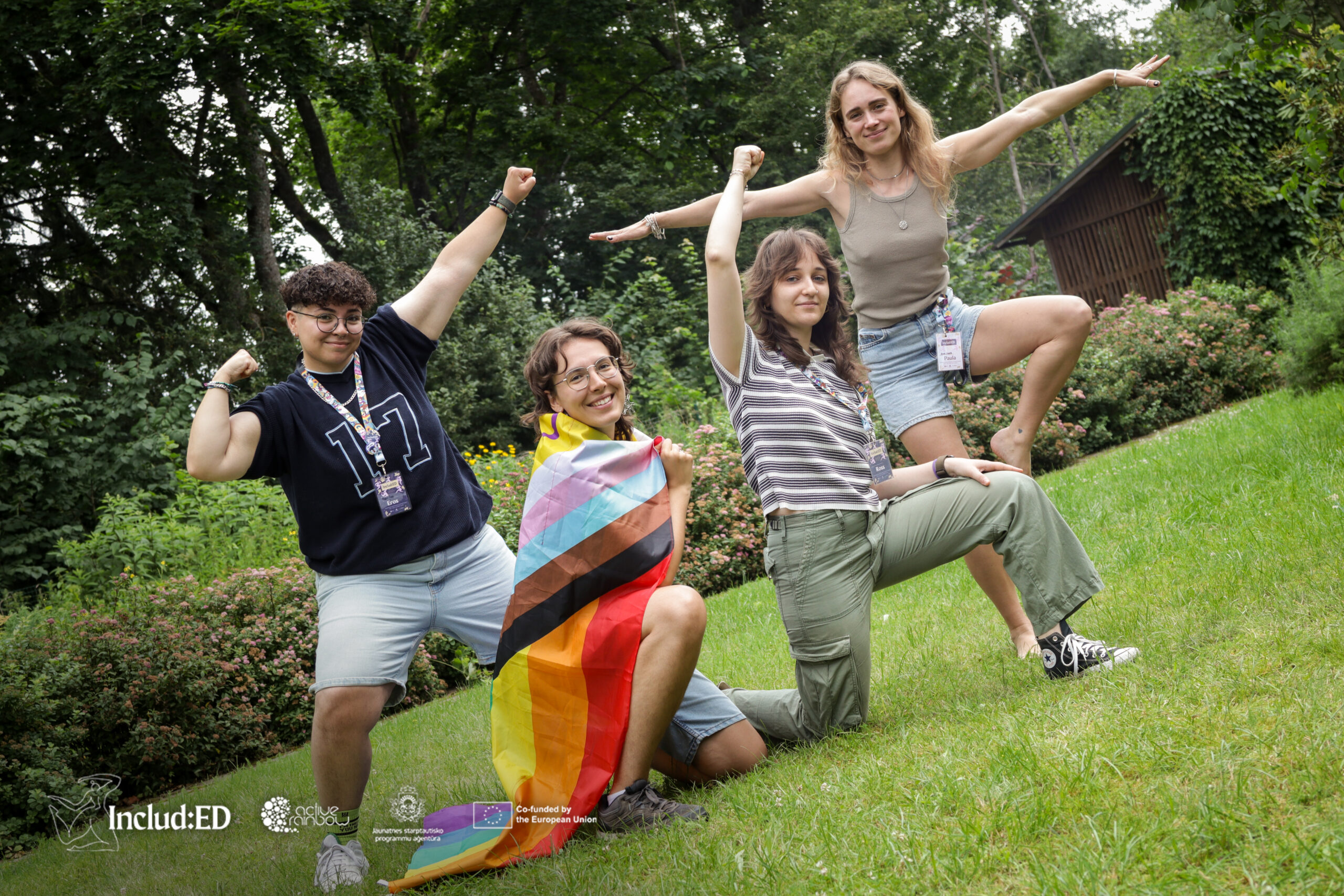
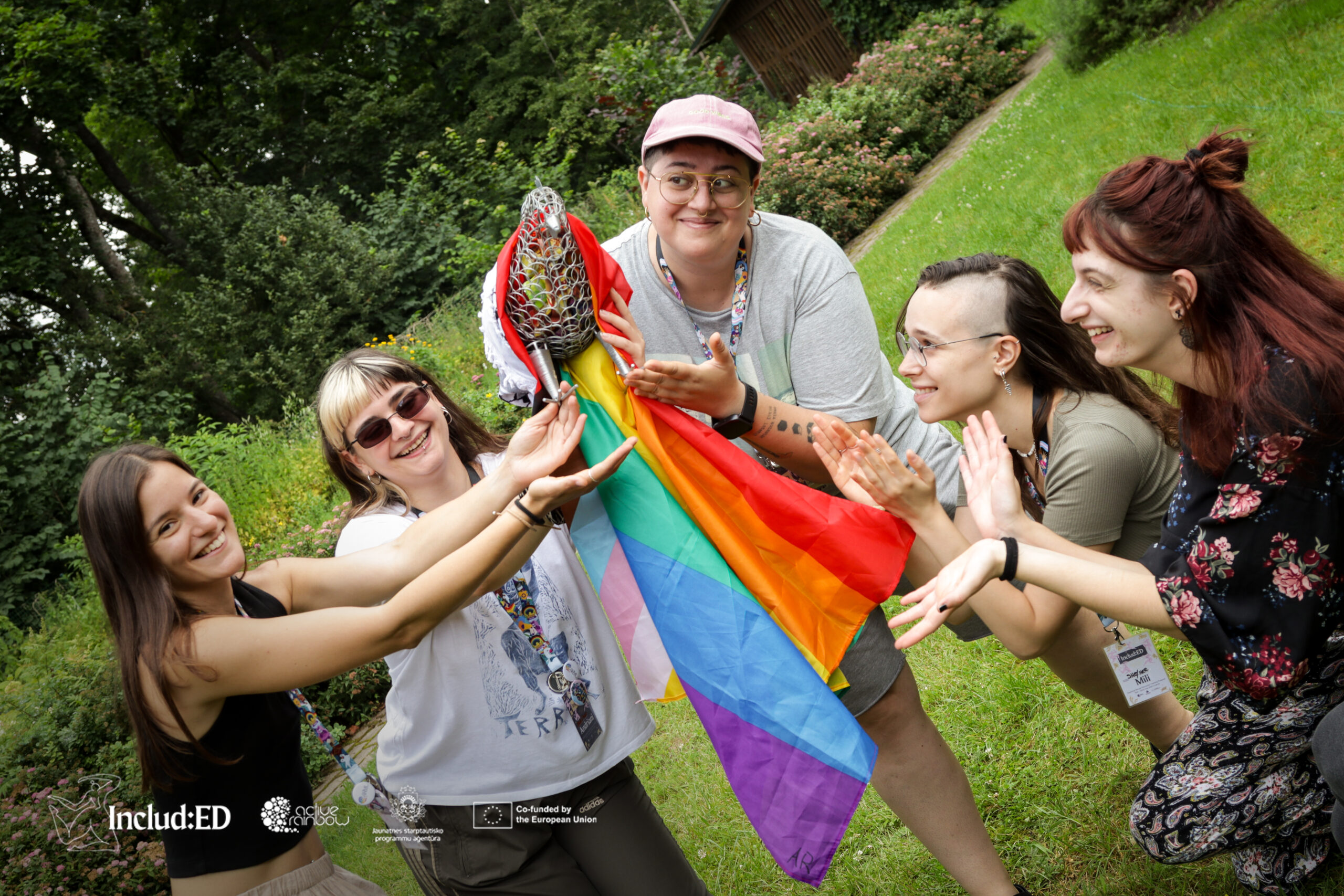
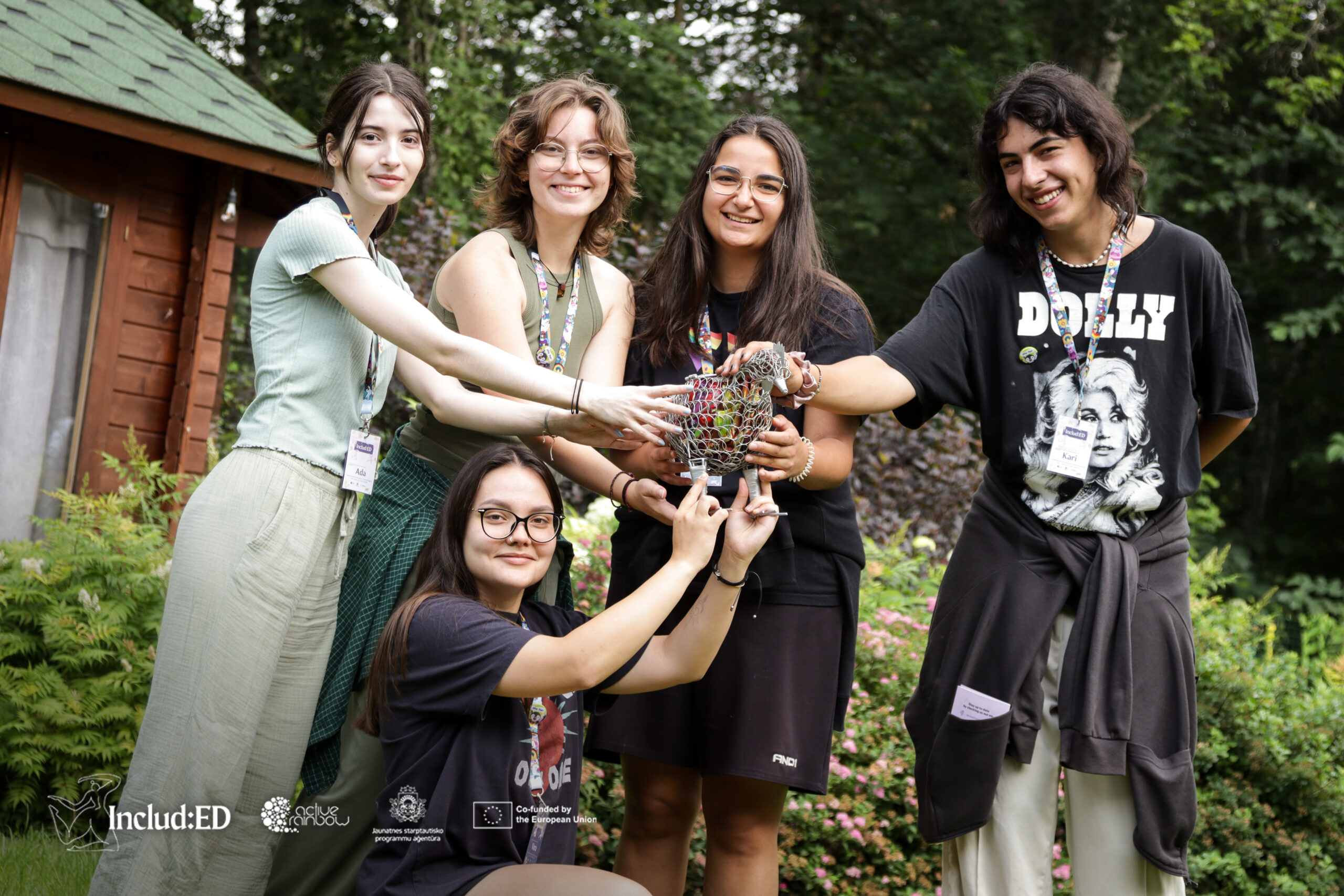
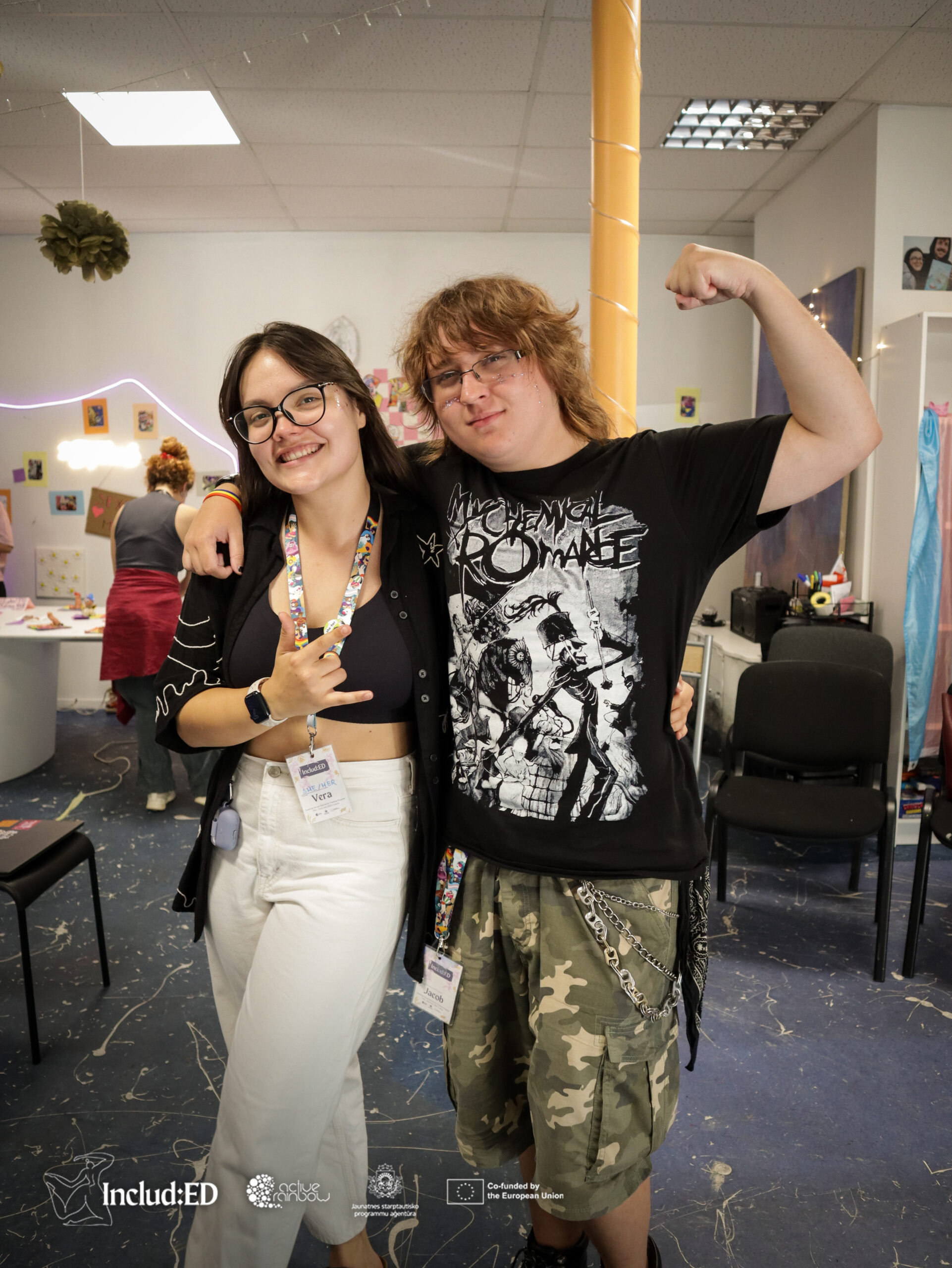

The project was organized in 2025 by Active Rainbow and co-funded by the European Union’s Erasmus+ programme, which is administrated in Latvia by the Jaunatnes starptautisko programmu aģentūra (Latvian National Agency).
Partners: Gender Doc-M (Moldova), G-All – Gender Alliance Initiative (Greece), Cassero LGBTQIA+ Center / Global Cassero (Italy), Asociación Colectivo MosaiQ (Spain), Kolektiv Mana (Serbia), Bilitis Foundation (Bulgaria), Moja Mavrica (Slovenia).
Disclaimer: The information and views set out in this publication are those of the authors and do not necessarily reflect the official opinion of the European Union. Neither the European Union institutions and bodies nor any person acting on their behalf may be held responsible for the use which may be made of the information contained therein.